Web
Product Strategy
Product Design
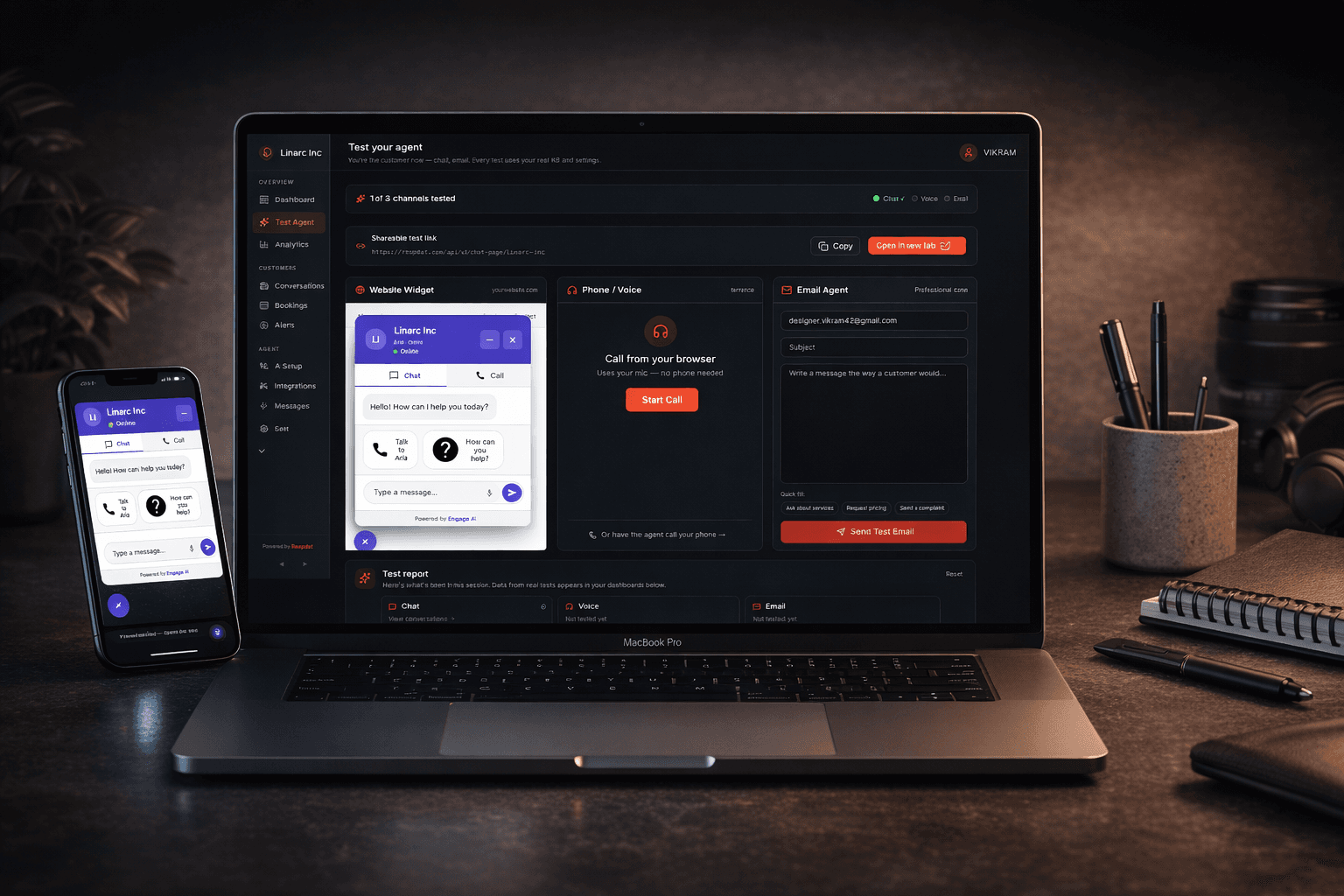
About the project
Project Summary
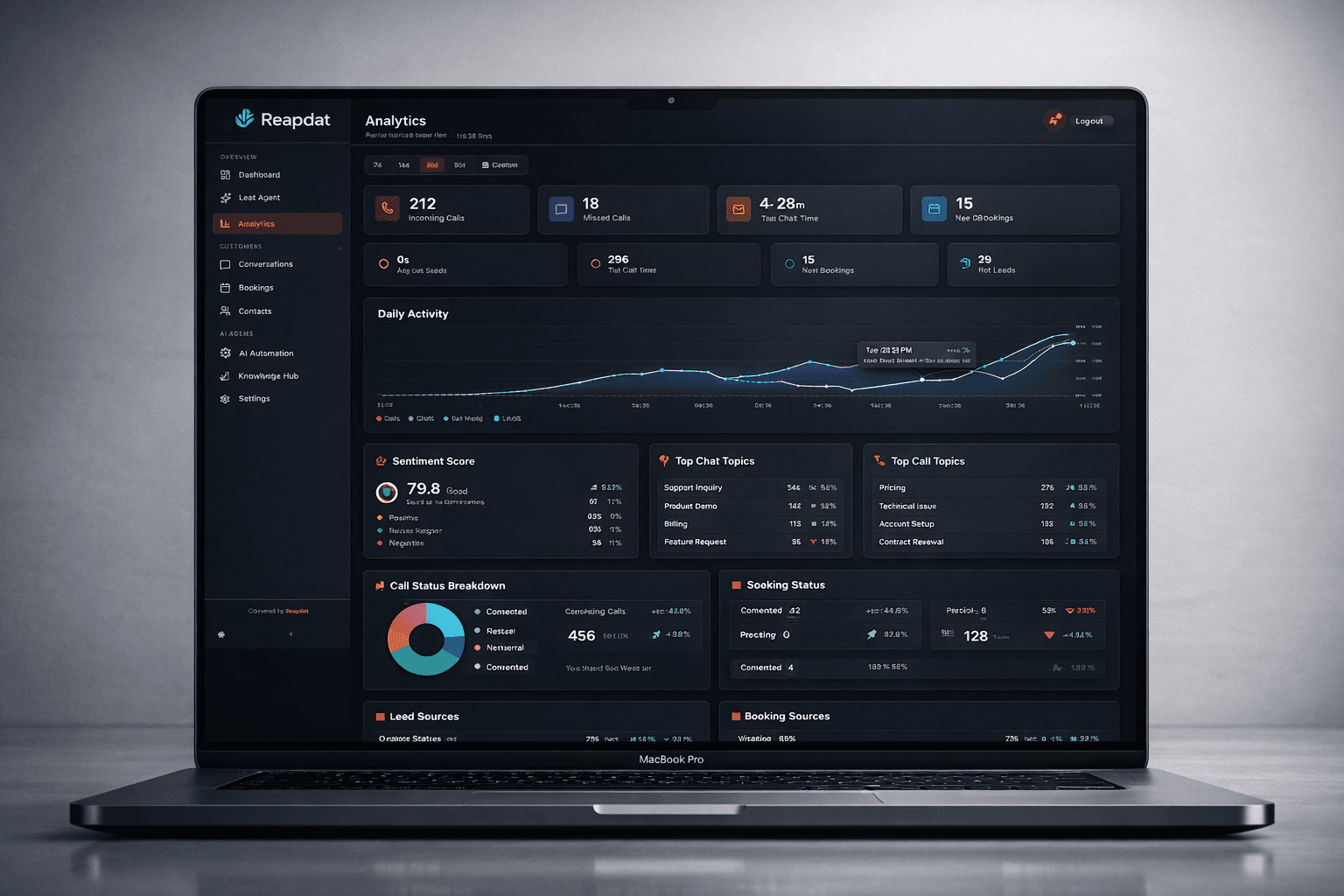
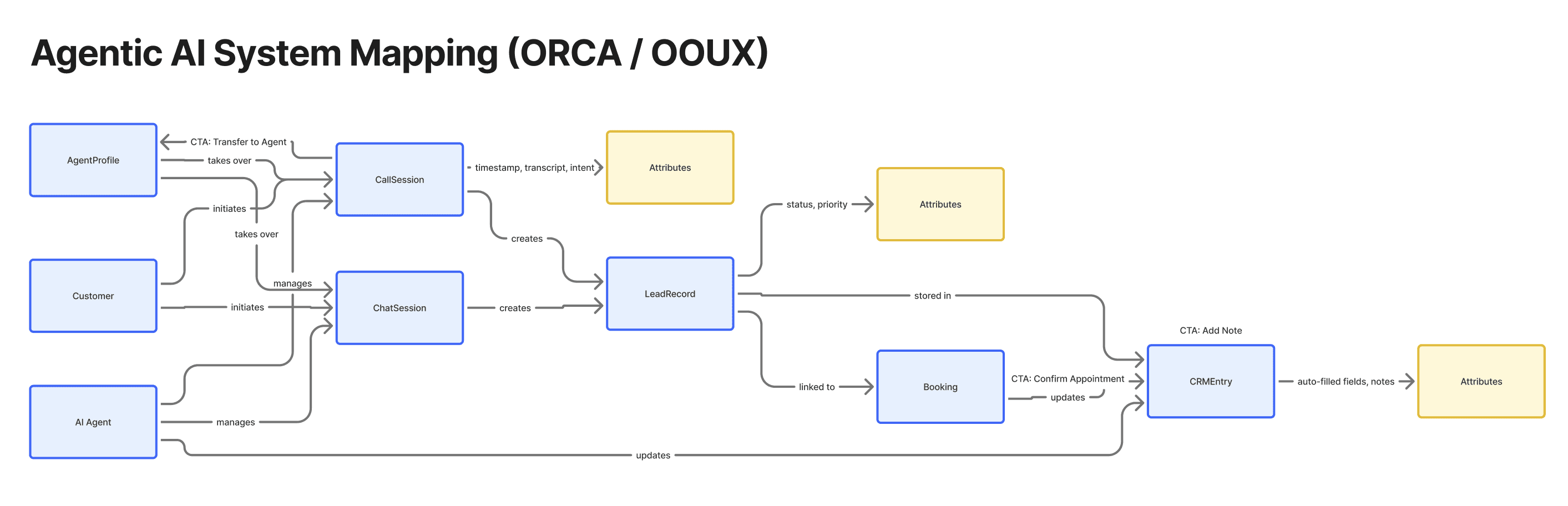
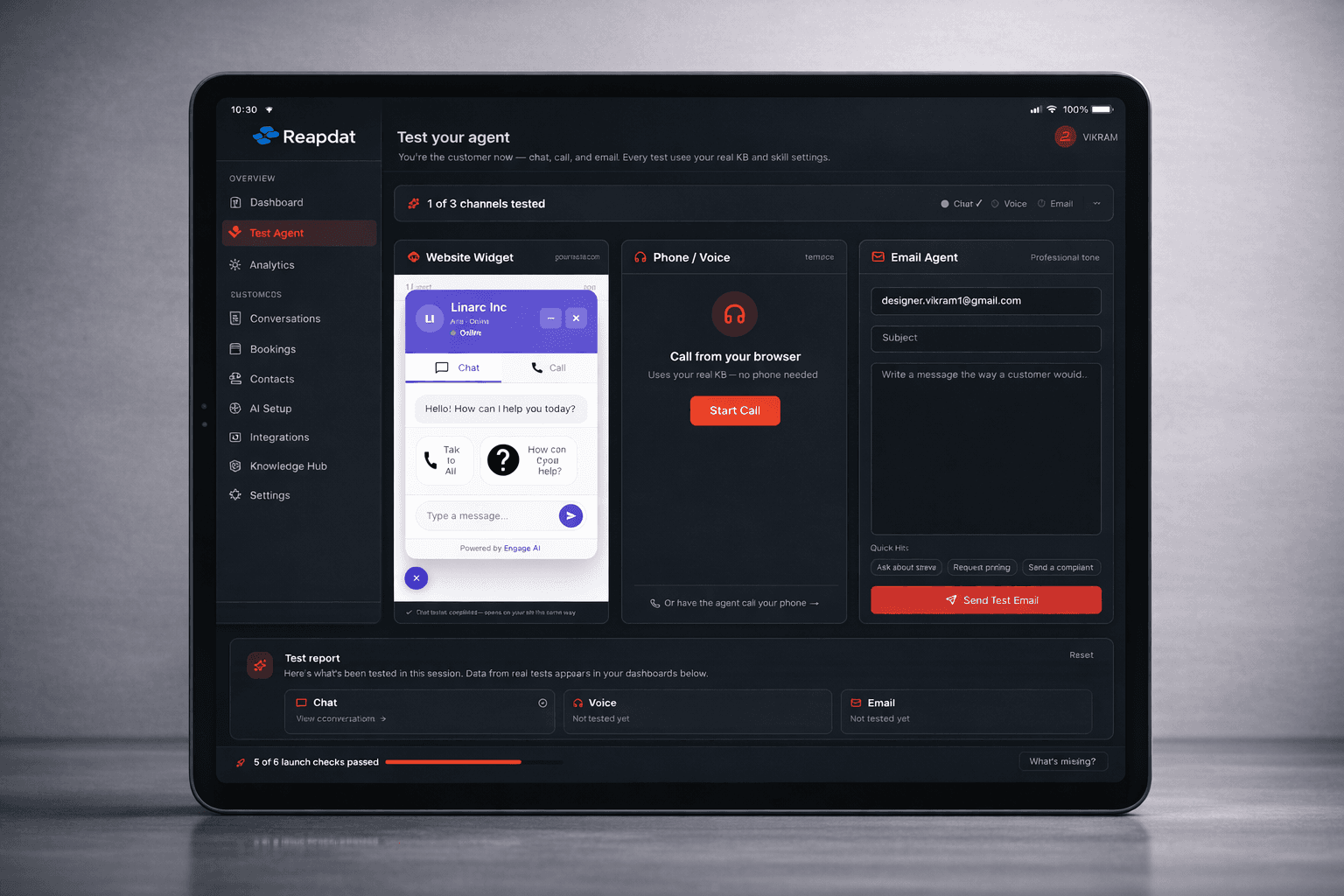
Reapdat is an agentic AI platform that transforms customer care by seamlessly integrating voice calls, chat messaging, appointment scheduling, and CRM automation. The platform enables businesses to handle customer interactions with AI-first intelligence while maintaining human oversight and control. Through strategic UX design, we created a system that reduced manual CRM work by 60% and missed leads by 80%, delivering measurable business impact while ensuring transparency, accessibility, and ethical AI governance.
The Problem
Customer care teams face fragmentation, manual workflows, and missed opportunities that impact revenue and satisfaction.
Missed Leads from Unanswered Calls 70% of potential customers hang up after 60 seconds without reaching a human. After-hours calls and peak times result in lost revenue opportunities.
Manual CRM Updates Customer service reps spend 40% of their time logging call details, updating records, and entering data manually, time that could be spent on high-value interactions.
Fragmented Tools & Workflows Teams juggle separate platforms for calls, chat, scheduling, and CRM — leading to context switching, data silos, and inconsistent customer experiences.
Lack of AI Transparency Existing AI solutions don't clearly communicate when AI is handling interactions vs. humans, creating trust issues and compliance risks for regulated industries.Research
Goals & Requirements
Design principles that guided our approach to building a trustworthy, efficient AI system.
Seamless AI ↔ Human Handoff Design intuitive transfers between AI and human agents with full context preservation and zero customer friction.
Automated CRM Updates Eliminate manual data entry by automatically extracting, structuring, and logging interaction data into CRM systems.
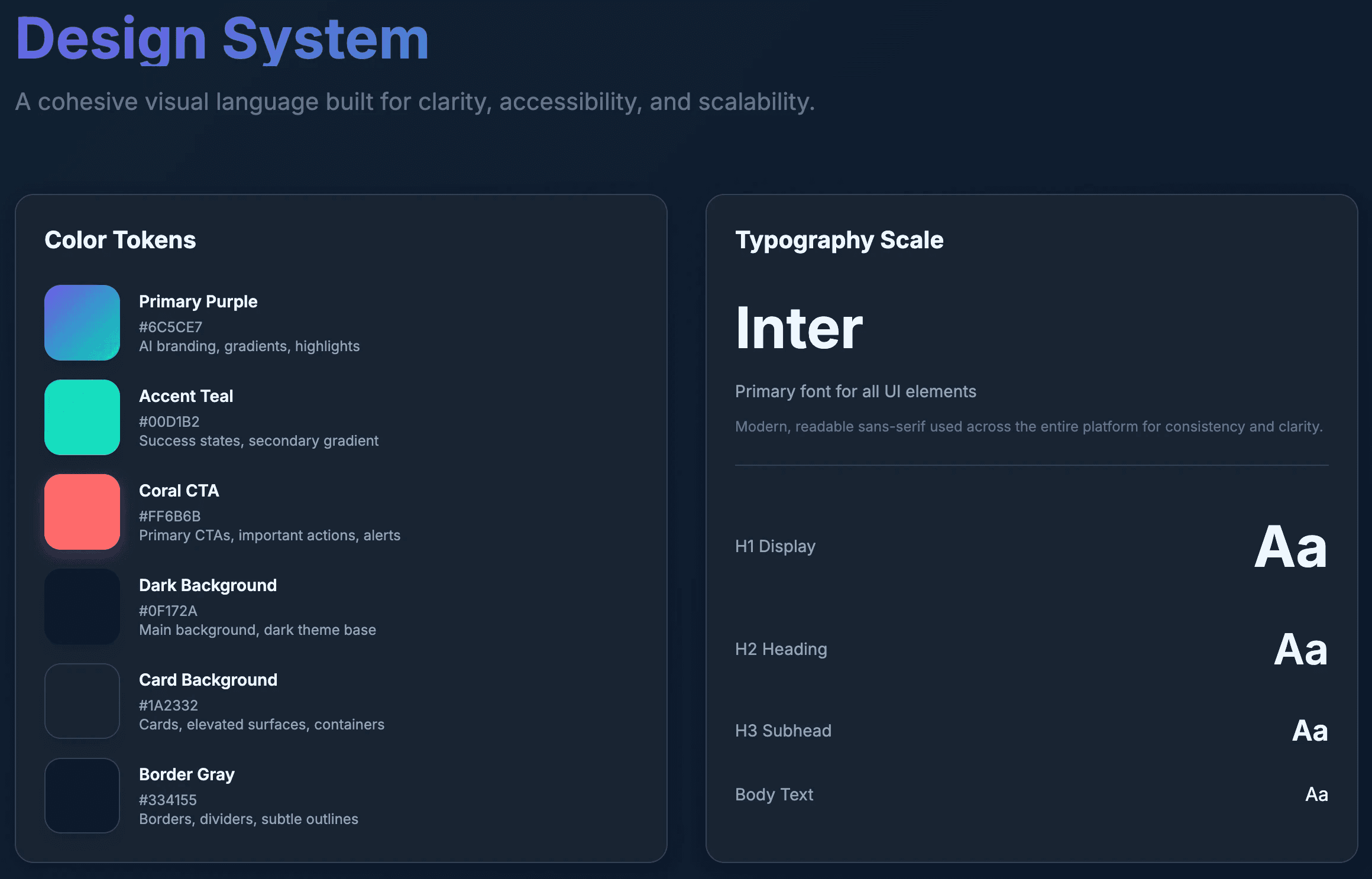
Accessibility & Compliance Meet WCAG 2.1 AA standards and industry regulations (HIPAA, GDPR) with accessible UI and privacy-first architecture.
End-to-End Automation Create unified workflows that connect calls, chats, scheduling, and CRM in a single coherent system with minimal manual intervention.
Outcome
Unified end-to-end customer-care experience
Reduced manual work and lead drop-off
Scalable, enterprise-ready UX foundation (in progress since Jan 2026)
Key Learnings
Critical insights that shaped the product strategy and design decisions.
AI Needs Transparency Users consistently reported feeling more comfortable with AI when they knew they were interacting with it. Hiding AI creates distrust; revealing it with confidence indicators and clear handoff options builds credibility. Transparency isn't optional, it's foundational to trust.
Users Need Control Over Automation Even when AI performs flawlessly, users want the option to escalate to a human. The "Transfer to Agent" button isn't just a fallback, it's a psychological safety net that makes users comfortable letting AI handle their requests. Control reduces anxiety.
Testing with Real Users is Critical Early prototypes assumed AI could handle 90%+ of interactions. User testing revealed edge cases, cultural communication differences, and emotional needs that required human touch. Iterative testing with diverse user groups prevented costly post-launch redesigns.
Client
Reapdat
Role
Product Strategy & Design
Timeline
Current Project
Year
2026

Visuals
See also

Linarc Enterprise Construction SaaS
Transforming Construction Project Delivery Through Unified Project Intelligence

Tokenized Gem Purchase Experience
Token-driven atomic architecture enabling scalable AI integration.
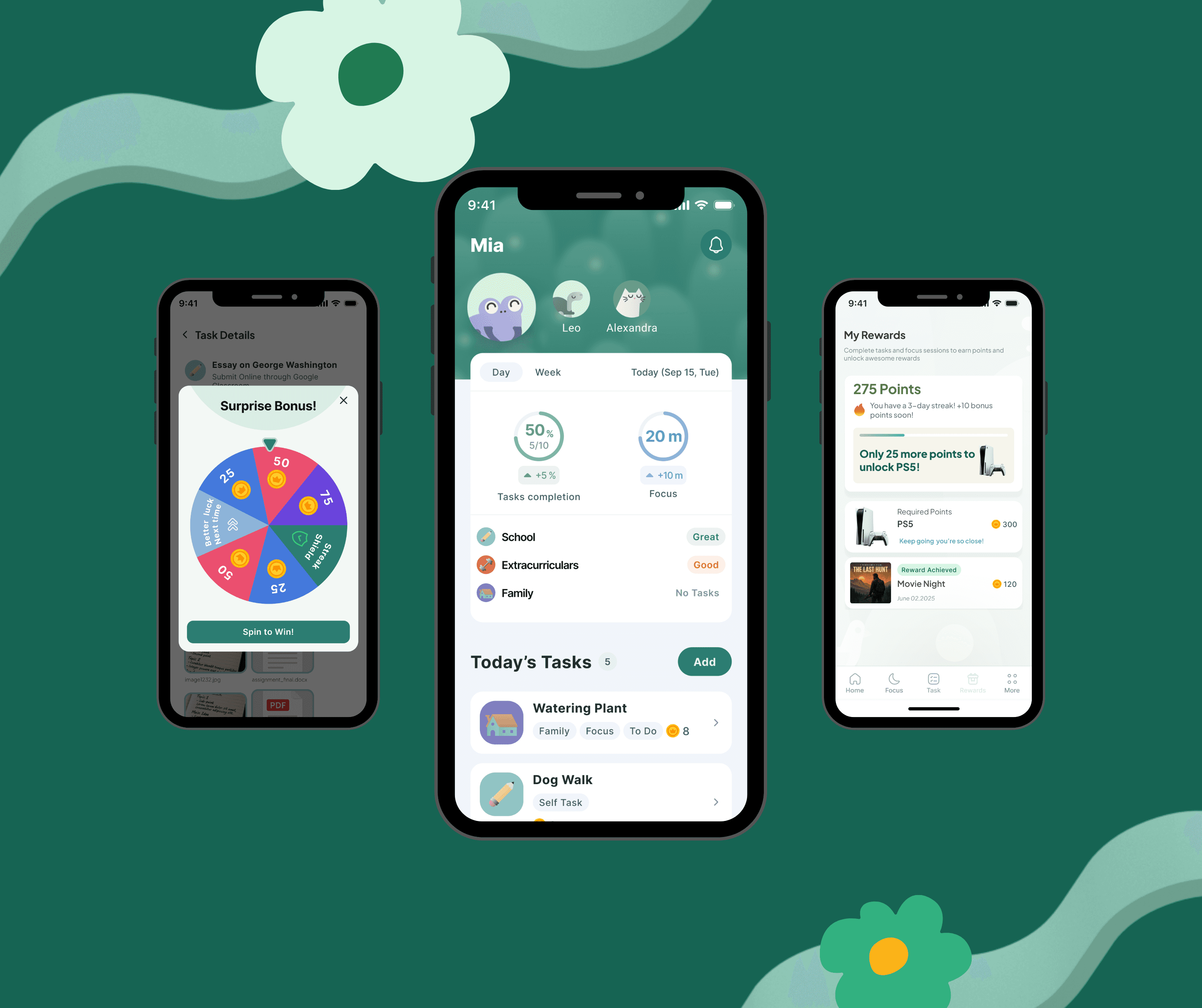
Parent & Children Behavioral OS (SAGE)
Reframing habit tracking into a structured behavioral operating system.